

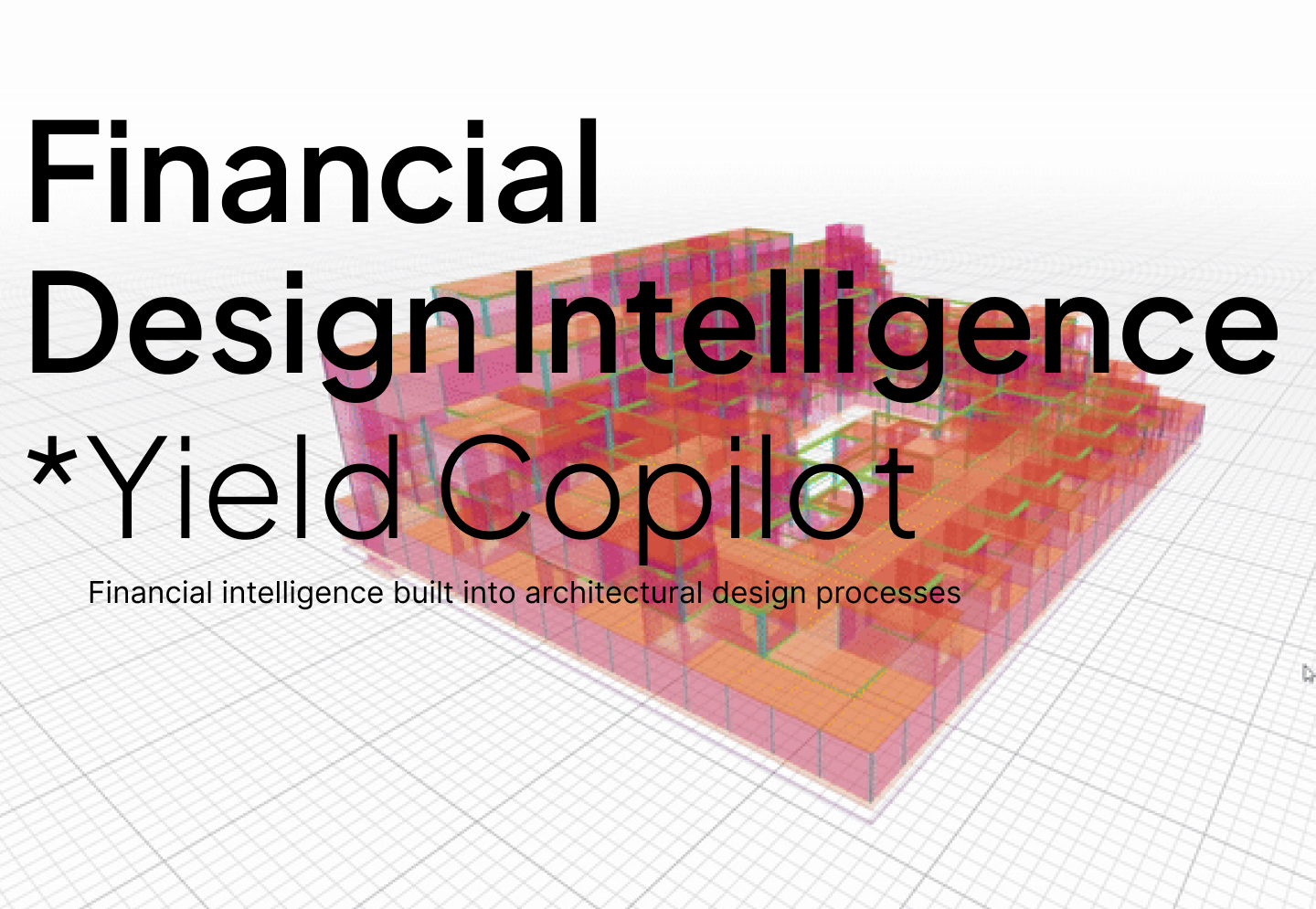
AI-driven financial design assistance.
By synthesizing multi-source data like RSMeans and IFC models, it allows architects and developers to collaborate in real-time, ensuring that visionary architectural concepts are backed by solid financial projections and optimized for maximum investment return.


.webp)
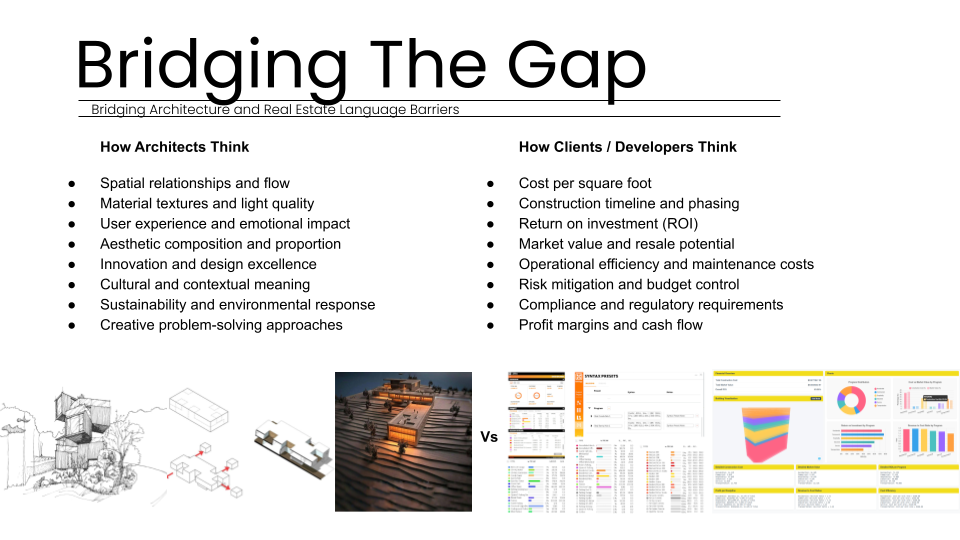
A Reality Disconnect
The primary challenge in the AEC industry is the disconnect between creative vision and financial feasibility.
Currently, 30% of construction projects experience significant cost overruns because financial analysis is typically performed after the design is finalized. This leads to a "tug-of-war" where rchitects dream big while developers struggle with brutal budgets. Miscommunication is a painful reality when project hopes break down during the feasibility phase. Architects often lack the tools to perform granular cost analysis during the creative process, while developers may view innovative design as a financial risk.
This silos the design and finance teams, resulting in endless, expensive redesign cycles that drain resources and stifle innovation.
Without a common language, the "Great Vision" of a project rarely survives the initial budget assessment without major compromises to quality and intent. There is a critical need for a system that can translate rchitectural geometry into real-world construction activities and market value in real-time.
Yield Copilot was designed to address this specific friction point by integrating financial logic directly into the design workflow, ensuring that financial viability is a core component of the creative process rather than an afterthought.
By catching these discrepancies early, the industry can avoid the misalignment that often leaves visionary projects dead on the drafting table. Establishing this intelligence allows for a fundamental shift toward transparent, collaborative decision-making between all project stakeholders.
Building Foundational Pillars First
The technical approach centered on establishing five interconnected data integration pillars to create a truly agentic assistant.
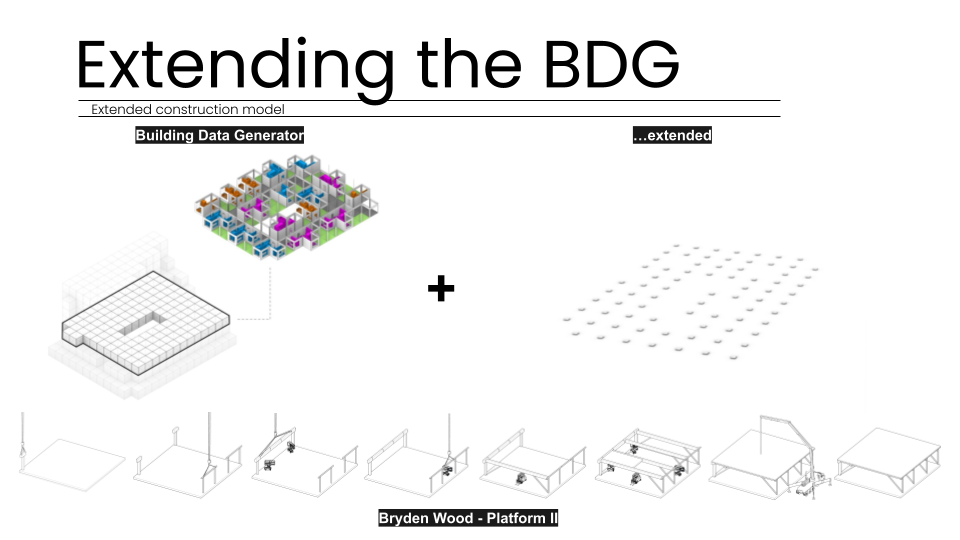
First, we extended a standard Building Data Generator (BDG) to incorporate construction intelligence by parametrically generating Bryden Wood Platform II structural systems.
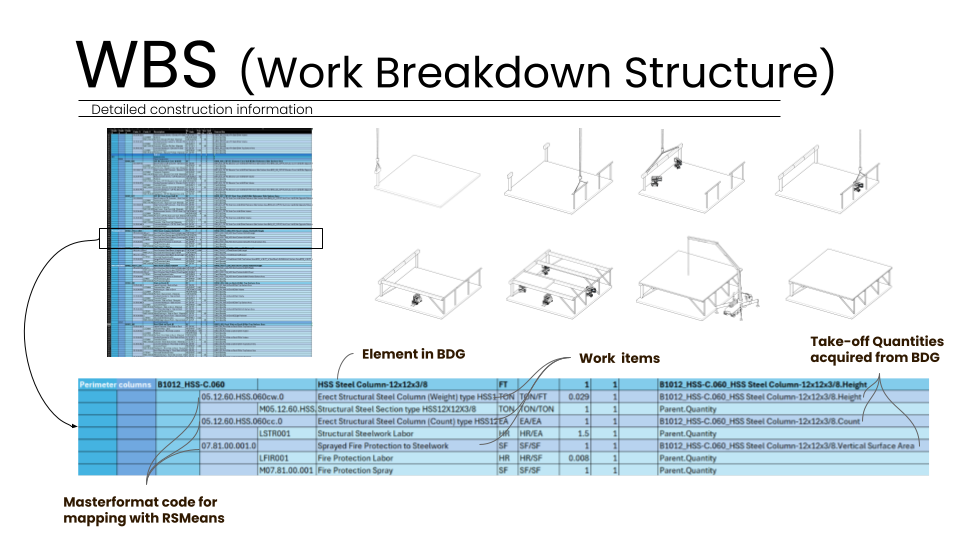
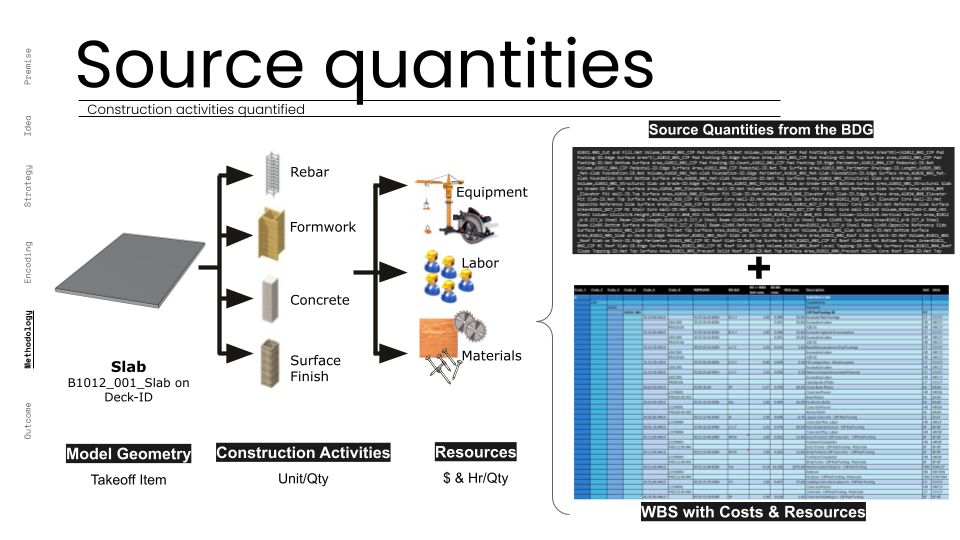
Second, we integrated a comprehensive Work Breakdown Structure (WBS) library that maps Masterformat codes to construction activities. This allows the system to assign costs for labor, materials, and equipment to every element in the building.
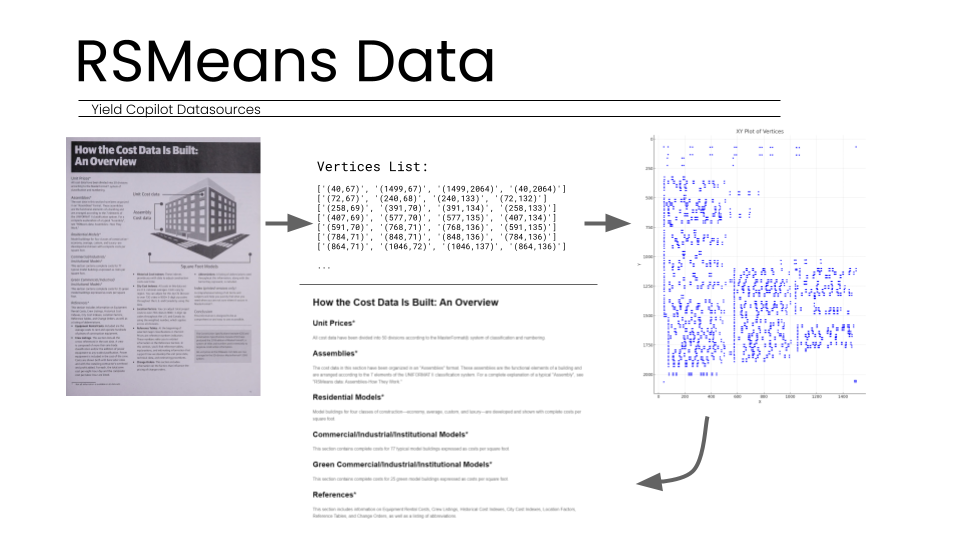
Third, we automated the ingestion of RSMeans cost handbooks. Using custom OCR workflows and Google Cloud Vision, we transformed scanned hierarchical data into machine-readable Markdown tables, drastically reducing token usage for LLM interpretation.
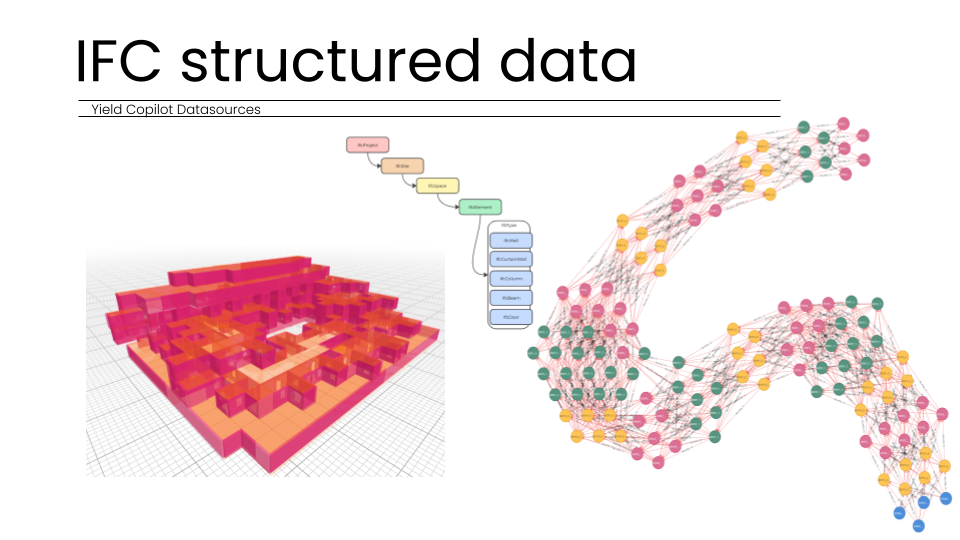
Fourth, we developed a sophisticated data conversion pipeline that transforms BIM data into queryable graph representations. This enables the use of graph algorithms like Dijkstra shortest path for scheduling and Louvain clustering for spatial allocation.
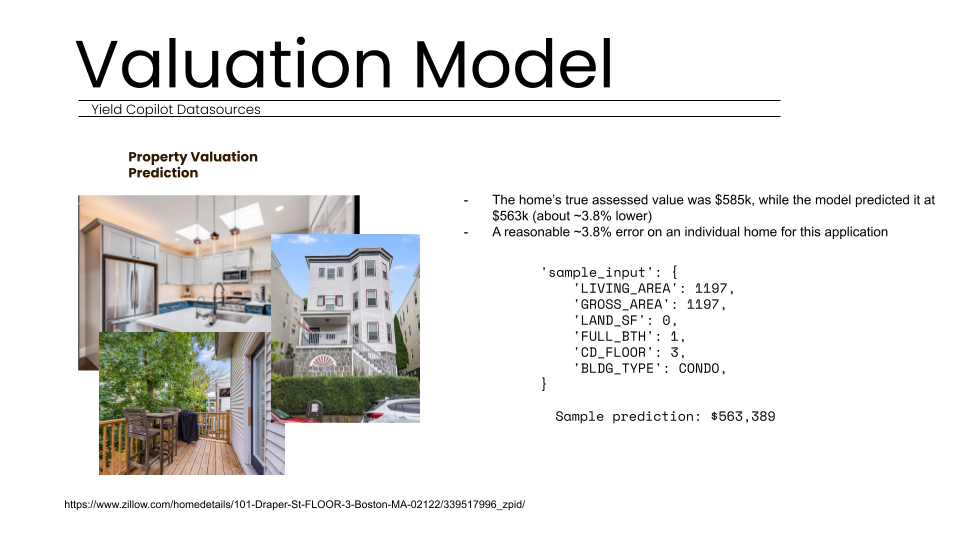
Finally, we trained machine learning models using Random Forest regression on real Boston market data to predict property valuation based on variables like area, bed/bath counts, and floor levels.
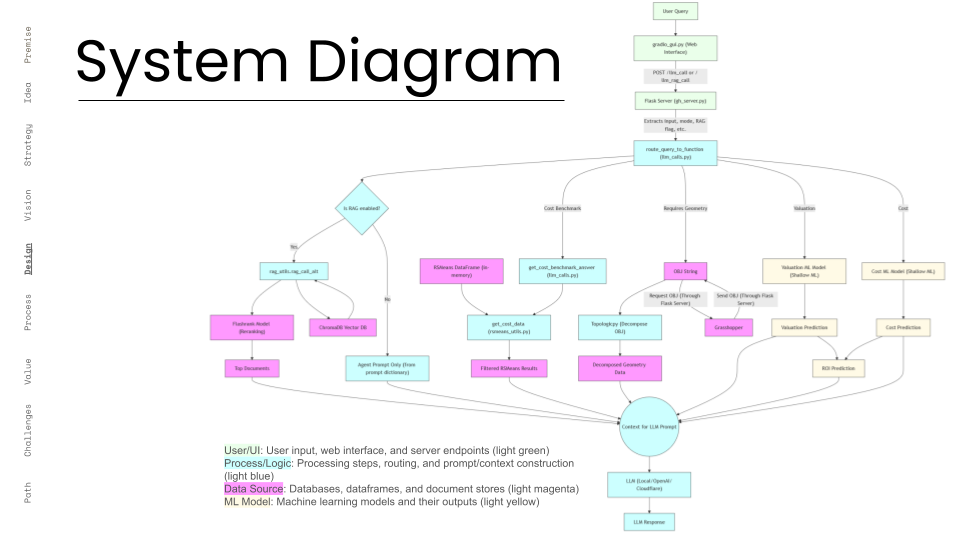
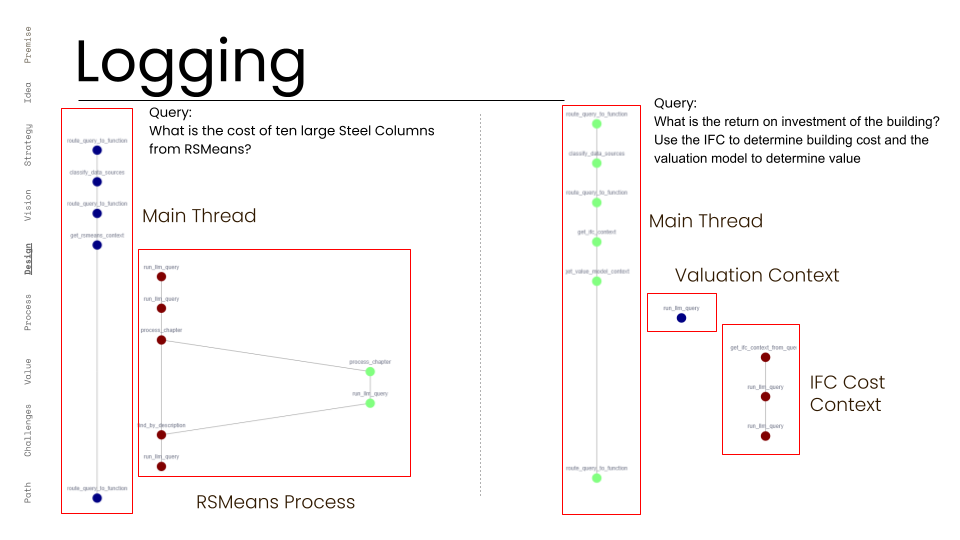
The system architecture uses an intelligent agentic routing mechanism that classifies natural language queries into specific categories, such as ROI analysis or cost benchmarks. When a user asks a question, the Flask-based backend parallelizes context retrieval to minimize latency, ensuring a responsive dialogue.
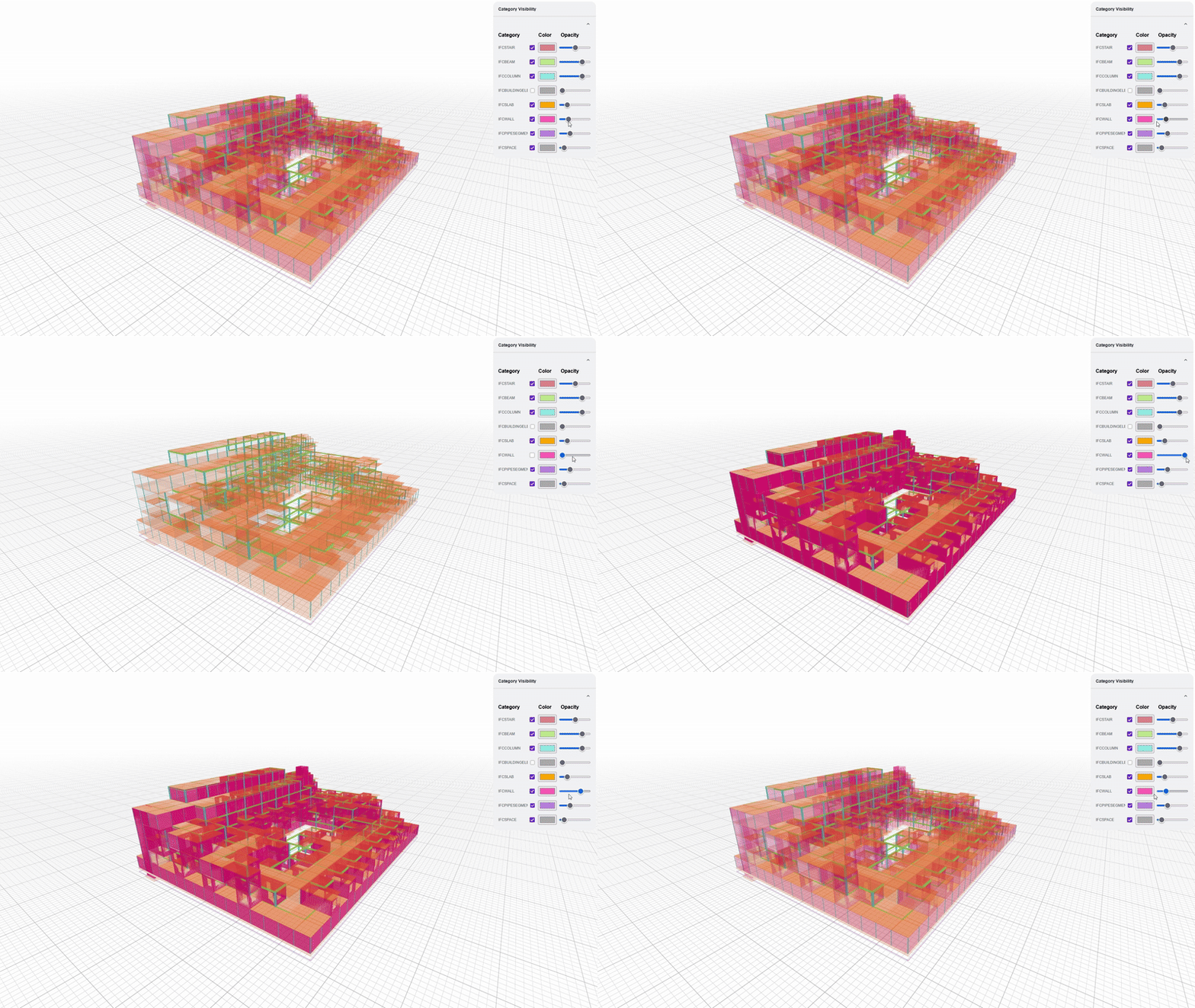
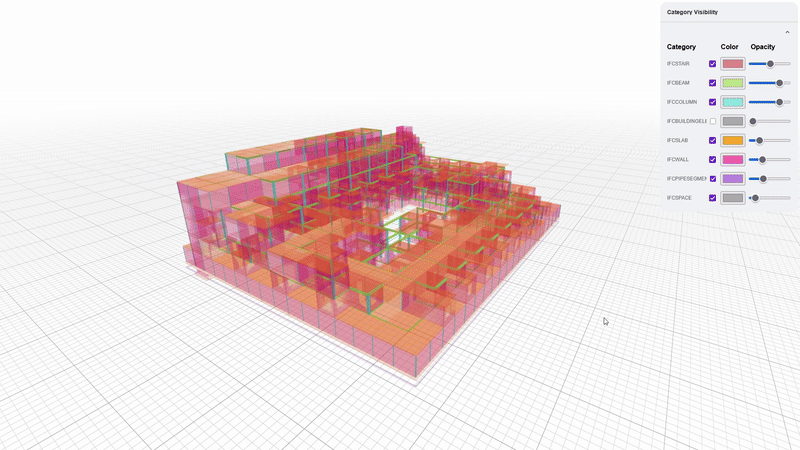
This multi-source synthesis ensures that every response is backed by specific, validated data points rather than general AI hallucinations. The approach focuses on "Design-Time" intelligence, where the platform assigns colors and opacities to 3D model elements to provide visual feedback alongside textual analysis.
Modular Orchestration
Yield Copilot is a modular AI system built on a Flask backend that orchestrates multi-source data retrieval through an agentic router. It synthesizes IFC geometry, WBS cost libraries, RSMeans data, and ML valuation models to provide real-time architectural dialogue. This configuration allows for high flexibility in handling complex "what-if" scenarios, transforming budget data into design intelligence.
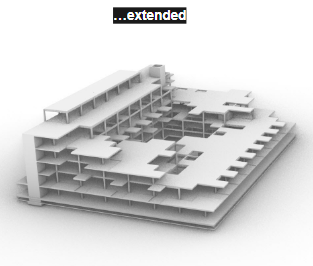
Extended Building Data Generator:
Parametrically generates modular geometry and structural systems like Bryden Wood Platform II to ensure designs are construction-ready and accurately quantified for detailed cost and labor analysis.
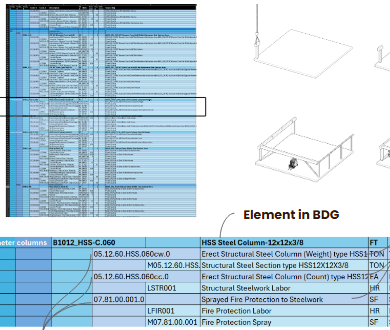
Work Breakdown Structure Library:
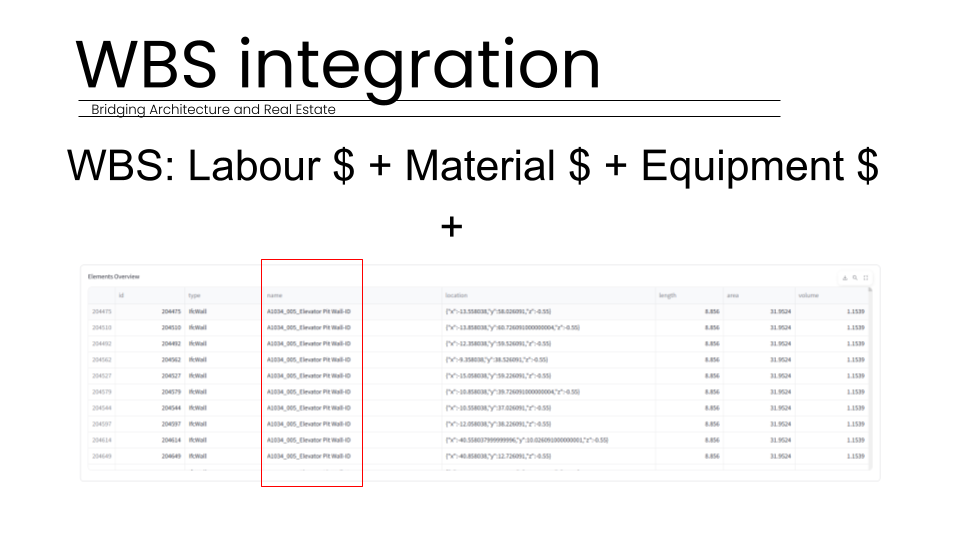
A granular calculator mapping Masterformat codes to labor, material, and equipment costs. This allows element-by-element tracking of total construction expenses and scheduling dependencies.
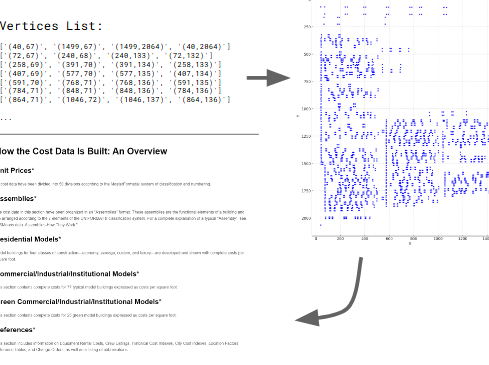
RSMeans OCR Pipeline:
Custom data ingestion workflow using Google Cloud Vision to convert hierarchical cost records into structured tables. This enables the LLM to provide industry-standard cost benchmarks in real-time.
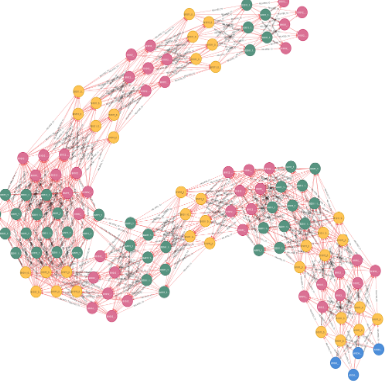
IFC Graph Representation:
Transforms 3D building data into queryable networks to analyze spatial work zones and identify schedule bottlenecks. It identifies the "shortest path" for construction activities, turning static BIM geometry into logistical intelligence.
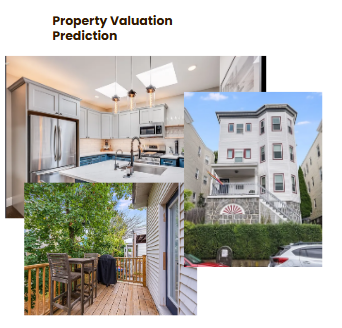
ML Property Valuation Model:
A Random Forest regression model trained on real market data to estimate building value with 91% R² performance. By analyzing spatial design choices, the system provides designers with instant ROI feedback, anchored in market reality.
Technical Core:
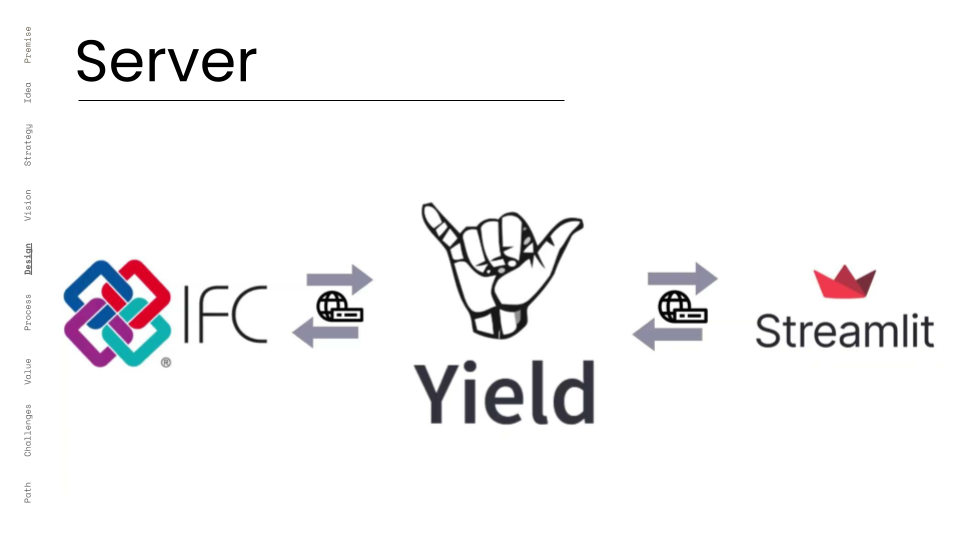
The platform's technical core is an intelligent agentic routing mechanism that handles natural language interaction through a specialized Flask-based backend architecture.
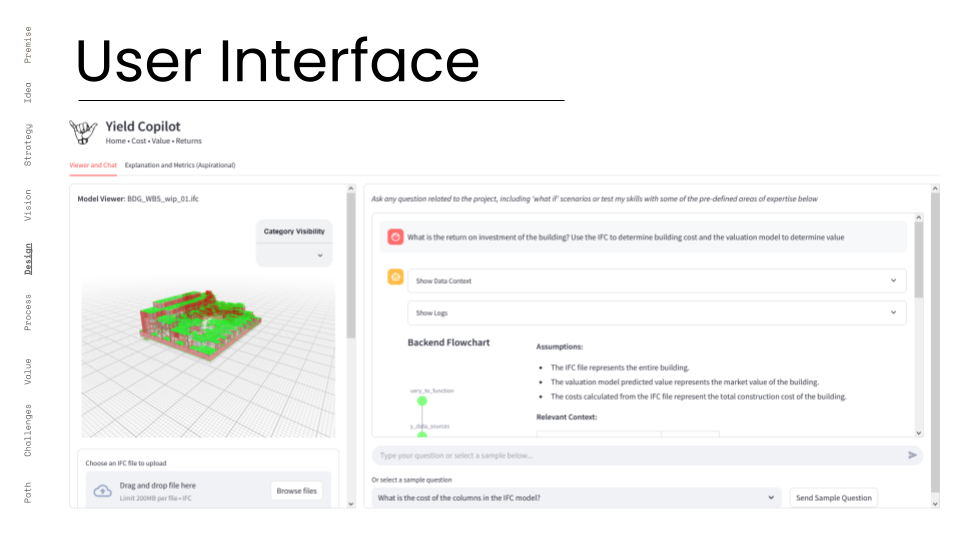
When a user inputs a query via the Gradio interface, the system determines the required data sources (RSMeans, IFC models, or valuation logic) and routes the request accordingly.
This architecture ensures high scalability and low latency through parallel processing of context retrieval functions.
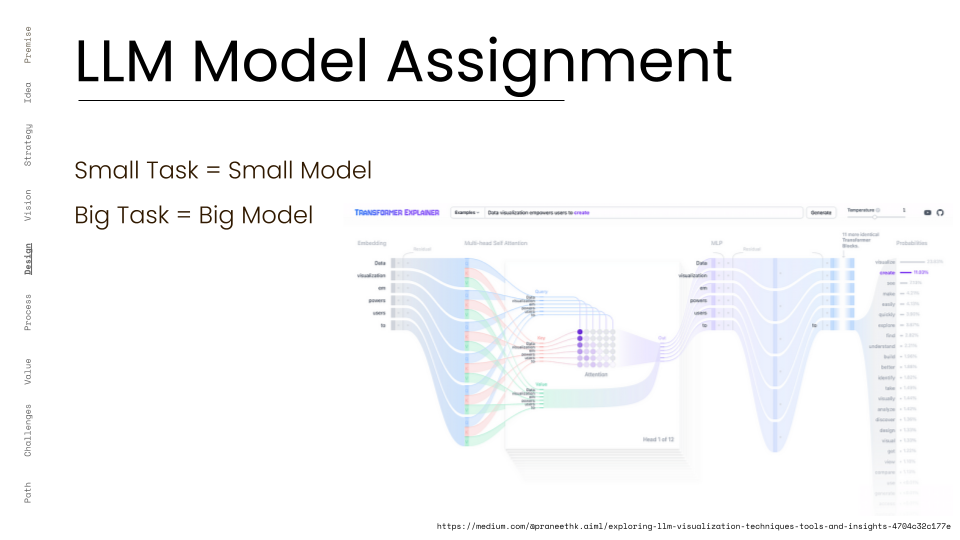
We implemented energy-conscious AI practices by dynamically selecting the appropriate LLM size based on task complexity, using smaller models for simple data extraction and larger ones for multi-variable ROI analysis.
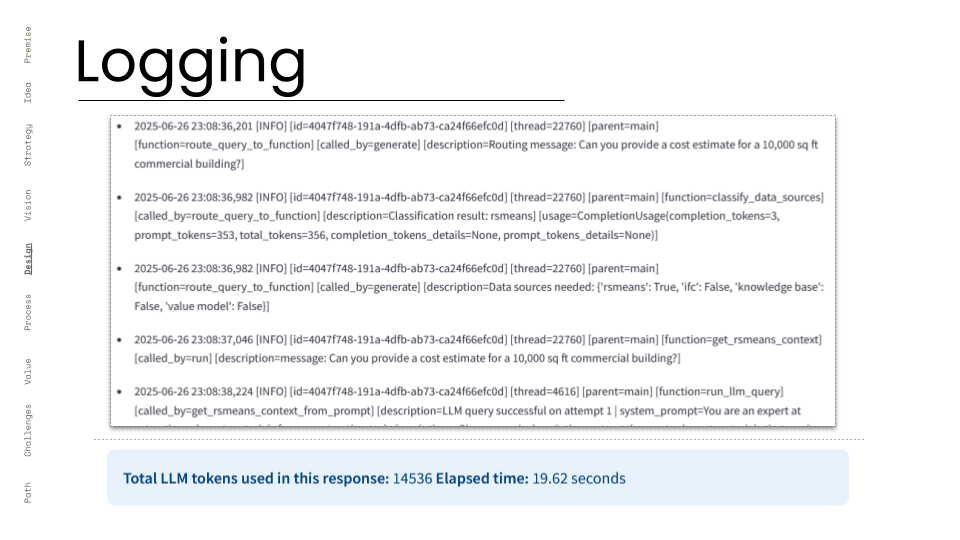
The backend also features robust logging, allowing users to track every step of the AI's "thought process" in real-time via the interface.
This transparency builds trust between the user and the system, ensuring that architectural decisions are always supported by traceable data and sound engineering logic.
When early testing goes a long way
To validate the effectiveness of Yield Copilot, we performed rigorous testing across its primary data integration pillars: cost estimation accuracy, valuation precision, and system latency.
One of the primary tests involved the ML property valuation model, which was trained on a dataset of Boston multi-family residential properties. We used a test for a condo with a specific living area of 1,197 sq ft and 1 full bath. The model predicted a market value of $563,389, while the true assessed value was $585,000. This resulted in an error rate of only 3.8%, demonstrating the model's reliability for early-stage feasibility studies.
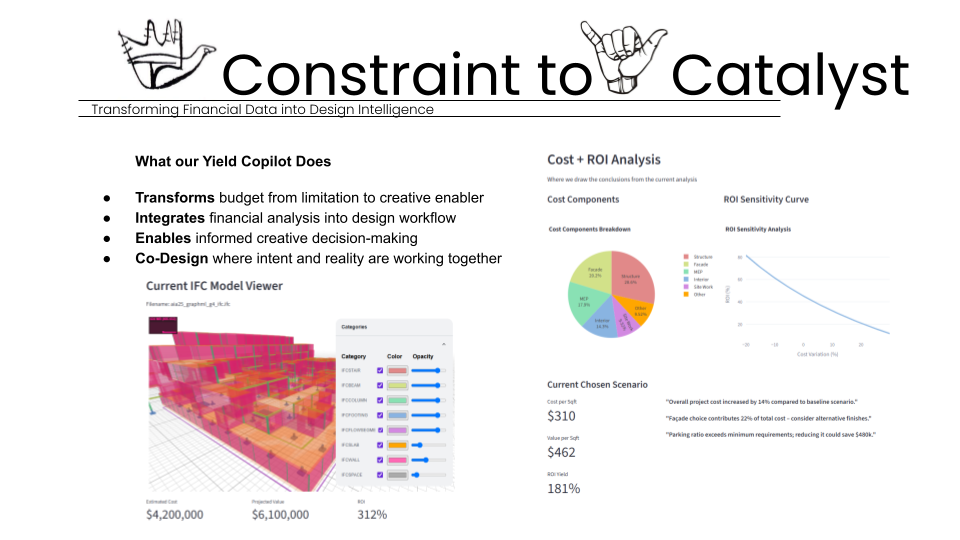
In terms of cost estimation, for a project with a baseline budget of $4.2 million and a projected value of $6.1 million, the system successfully identified that the current chosen scenario would yield an ROI of 45.2%. However, by running sensitivity analyses, the system flagged that project cost had increased by 14% compared to the baseline due to specific façade choices, which contributed 22% of total cost. The Copilot suggested alternative finishes and noted that reducing the parking ratio could save $480,000, ultimately optimizing the project to a higher ROI yield of 181%.
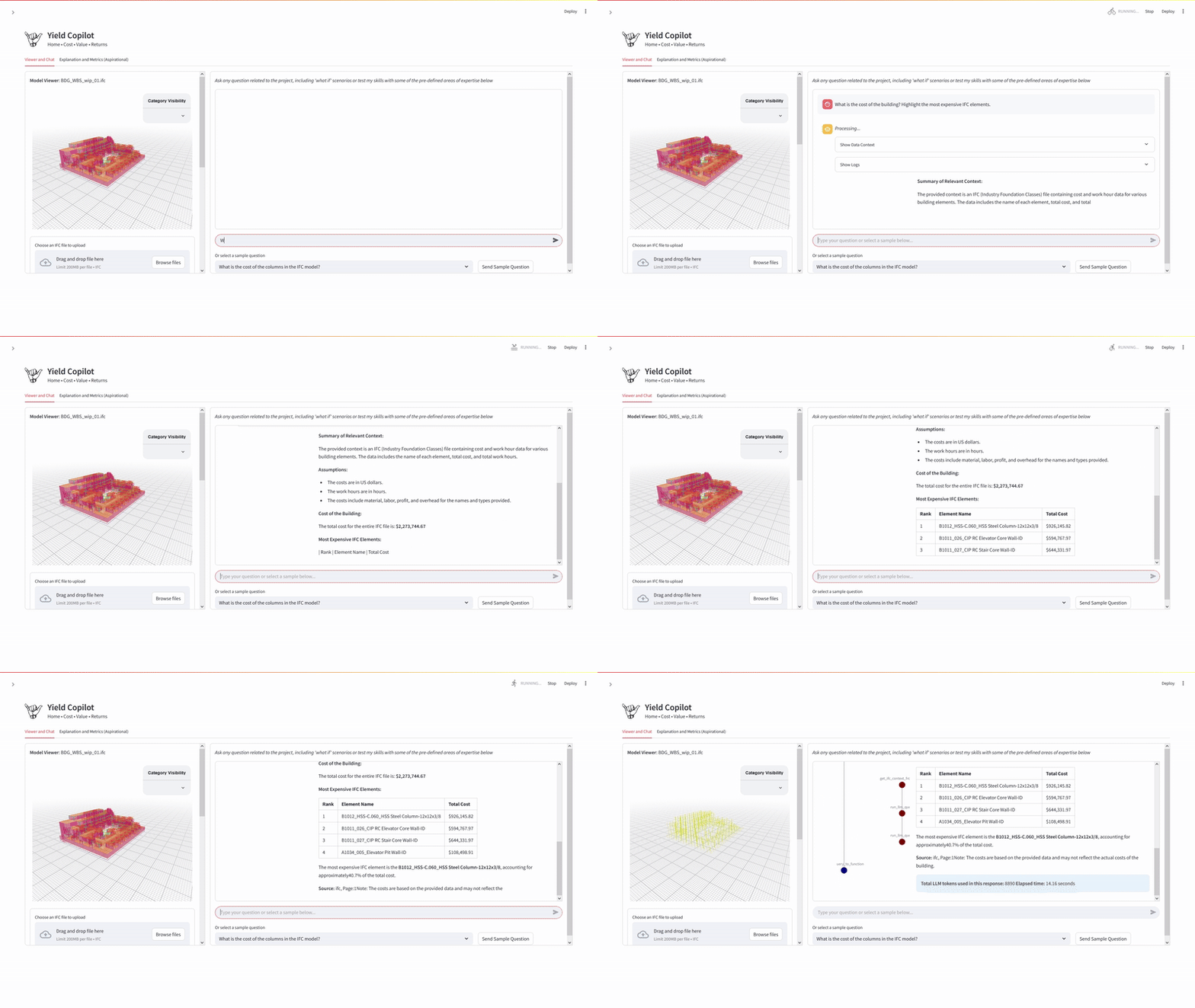
Backend performance was validated through detailed logging of parallel LLM calls. A test query regarding a 10,000 sq ft commercial building utilized a total of 14,536 tokens across multiple processing steps but completed the entire retrieval and analysis in 19.62 seconds.
The agentic router correctly classified the data sources neededin this case, prioritizing RSMeans while excluding the IFC and value modelswich minimized unnecessary compute resource usage.
For construction scheduling, the system converted IFC models into graph representations to test spatial work zone allocation.
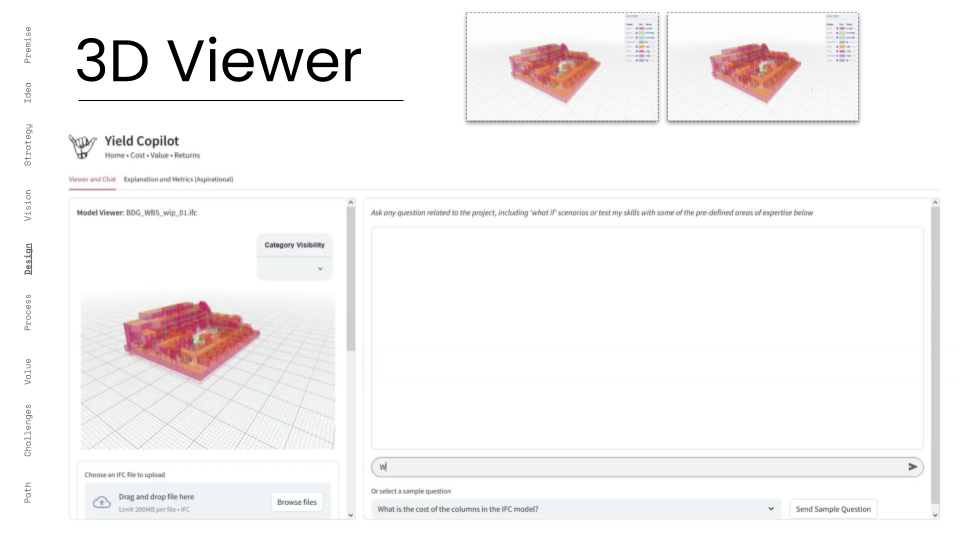
The 3D viewer was also tested for real-time reactivity, where asking about specific components like columns caused the interface to instantly highlight the relevant elements with specific colors and opacities.
Finally, the RAG pipeline demonstrated the ability to extract relevant construction methodologies to ground financial advice in established engineering practices.
We also tested the quantification accuracy of the WBS library, mapping steel column weights to temporal labor rates (1.5 HR/EA), ensuring that labor costs were as precisely calculated as material costs.
Financial Logic

Unparalleled Valuation Accuracy
The system's machine learning model, trained on high-cardinality Boston residential data, achieves a 91% R² performance. During testing, the model predicted property values within a 3.8% error margin compared to true assessed values, providing a reliable foundation for ROI analysis. This precision allows developers to move forward with confidence, knowing their investment return targets are based on rigorous feature engineering and domain-filtered data sets rather than broad market averages.

Optimized ROI Sensitivity
Yield Copilot identified that specific design choices, such as high-cost façades, accounted for 22% of total project expenses. By running sensitivity analyses on parking ratios and material finishes, the system identified over $480,000 in potential savings. This optimized the project from a baseline 45% ROI to a potential yield of 181%, proving that intelligent value engineering during the design phase can dramatically improve the financial performance of visionary architecture.

Real-Time Data Synthesis
The agentic routing system processes complex multi-variable queries in under 20 seconds, even when synthesizing context from tens of thousands of data points. By parallelizing LLM calls and context retrieval from IFC models, RSMeans tables, and the RAG knowledge base, Yield Copilot provides an immediate dialogue between intent and reality. This efficiency eliminates the weeks-long delay traditionally associated with cost estimation, allowing for an agile design process where every change is instantly assessed for impact.
Construction Flow Intelligence
Through graph algorithms like Louvain clustering and Dijkstra analysis, the platform transforms static 3D geometry into a dynamic construction schedule. This identifies potential work zone bottlenecks before they reach the site, allowing for proactive design adjustments. Integrating the Work Breakdown Structure directly into the IFC export ensures that material, labor, and equipment needs are quantified with temporal precision. This technical synergy reduces the risk of cost overruns, which currently affect 30% of industry projects.
What This Means for Developers, Investors & Enterprise
Yield Copilot addresses the massive $10.64B construction software market by solving the industry’s most persistent friction point: the 30% cost overrun problem.
For real estate developers and investors, the platform provides a mission-critical tool for early-stage feasibility and ROI optimization. By synthesizing RSMeans data, Work Breakdown Structure (WBS) libraries, and proprietary Machine Learning valuation models, the system allows for high-fidelity market assessment before a single brick is laid.
In the emerging PropTech sector, Yield Copilot represents a significant advancement in data-driven risk mitigation. Enterprise-level architecture and development firms can leverage the platform’s Flask-based API to integrate financial intelligence directly into their existing BIM workflows, such as Revit or Procore.
The business case for Yield Copilot is centered on transparency and accelerated decision-making; what previously took months of manual takeoff and estimation now happens in a real-time conversational interface.
This efficiency transforms the traditional feasibility study into a dynamic, agile process where every design iteration is instantly validated against market reality.
For investors, the platform offers a unique window into portfolio-wide cost analytics and sensitivity analysis, ensuring that capital is allocated to projects with the highest potential yield.
As the AEC industry moves toward digital transformation, Yield Copilot serves as the "AI Financial Analyst" that ensures bold architectural visions are anchored in solid, defensible numbers. With revenue potential across SaaS subscriptions and consulting, the platform is positioned to lead the market in AI-powered cost intelligence.
Ultimately, for large-scale institutions, Yield Copilot is not just a tool—it is a strategic asset that builds trust between the visionary and the financier, fostering a collaborative environment where visionary architecture and economic sense coexist.
What This Means for Architects & The Design Practice
For the rchitectural profession, Yield Copilot fosters a fundamental cultural shift in design practice. R
ather than a tug-of-war between creativity and budget, the platform creates a partnership where financial insights empower rather than limit the designer. Architects can now be more confident in their boldest ideas because they are backed by solid, real-time data.
The platform bridges the "language barrier" between form and finance, allowing architects to speak directly to the client’s concerns regarding yield and ROI without sacrificing design excellence.
By utilizing "Design-Time" intelligence, the software transforms budget data into a creative catalyst, enabling designers to catch opportunities early and avoid the "heartbreak" of late-stage redesigns.
The platform’s five-pillar integration (from IFC graph representations to WBS quantification) gives Architects the technical power to defend their spatial choices with rigorous data.
The system’s 3D viewer and conversational interface allow for an unprecedented level of transparency, making complex cost data accessible to non-technical stakeholders through interactive element highlighting and color-coded cost overlays.
This proves that embracing AI in the creative process actually enhances the architect’s work, fostering a truly collaborative design environment where innovative architecture can thrive through shared intelligence.
As AI becomes an integral part of professional practice, Yield Copilot serves as the financial copilot every modern designer needs to build better, more responsible buildings for our cities.
FAQ
How does Yield Copilot predict building valuation with high accuracy?
Yield Copilot utilizes a machine learning model based on Random Forest regression trained on high-fidelity residential market data. By performing strategic feature engineering (including hybrid categorical encoding for high-cardinality variables and log transformations to capture non-linear value relationships) the model predicts assessed value based on living area, bathroom counts, and floor levels. During validation, this approach achieved a $R^2$ performance of 91%. For example, in a test involving a 1,197 sq ft condo, the model predicted a value of $563,389, representing only a 3.8% error margin compared to the true assessed value of $585k111. This technical precision provides architects and developers with a reliable foundation for calculating returns on investment (ROI) during the earliest, most critical phases of architectural design. The model also employs strategic imputation, treating missing data as informative features rather than errors, which ensures robust predictions across diverse property types, from multi-family typologies to single condos.
What are the five data integration pillars of the Yield Copilot system?
The system’s intelligence is built on five core pillars designed to bridge the gap between architectural intent and financial reality. First, the Extended Building Data Generator incorporates construction intelligence by parametrically generating Bryden Wood Platform II structural systems alongside modular geometry. Second, a comprehensive Work Breakdown Structure (WBS) library maps Masterformat classification codes to granular construction activities, including labor, material, and equipment unit rates. Third, the RSMeans OCR Pipeline transforms hierarchical cost handbooks into machine-readable Markdown tables through custom OCR workflows using the Google Cloud Vision API. Fourth, the IFC Graph Representation converts BIM data into queryable networks, enabling graph algorithms like Dijkstra for schedule bottleneck identification and Louvain clustering for spatial work zone allocation. Finally, the ML Property Valuation Model provides real-time market feedback. This synthesis allows the AI to perform complex architectural "what-if" scenarios, transforming budget data from a design constraint into a creative catalyst. By embedding WBS reference names directly into IFC exports, the system enables a seamless semantic analysis of 3D geometry, ensuring that every design choice is instantly quantified and validated against industry-standard cost benchmarks.
How does the AI agent classify and route different architectural queries?
The system employs an intelligent agentic routing mechanism that classifies natural language queries into five distinct processing categories: design-cost tradeoffs, ROI analysis, cost benchmarks, value engineering opportunities, and parameter-aware queries. When a user asks a question, the Flask-based backend utilizes specialized routing logic in the route_query_to_function script to extract relevant parameters and identify the necessary data sources. For instance, a query about column costs will trigger an IFC model scan, while a request for a general cost estimate will route to the RSMeans benchmark engine. This classification is monitored through robust logging, which provides the user with real-time feedback on "Data sources needed" and completion token usage. By parallelizing context retrieval functions, the system minimizes latency, allowing the platform to remain responsive even when generating up to a dozen complex LLM calls for a single multi-part question. This architectural flexibility ensures the agent is not just a simple chatbot but a sophisticated assistant that understands technical architectural intent and adapts its logic accordingly.
Can Yield Copilot identify and mitigate construction cost overruns?
Yes, Yield Copilot is specifically designed to address the 30% of construction projects that experience cost overruns due to early-stage design-finance misalignment. The platform addresses this by providing real-time ROI sensitivity analysis and cost component breakdowns. For example, the system can identify that a specific façade choice contributes 22% of total project costs and recommend alternative finishes to preserve the budget. It can also flag when parking ratios exceed minimum regulatory requirements, suggesting that reducing the parking count could save approximately $480,000. By visualizing these data points in a color-coded 3D viewer, architects can instantly see which building zones are "expensive" versus "efficient," enabling informed creative decision-making during the design phase. This proactive "Value Engineering" capability ensures that visionary architectural ideas are anchored in financial reality, preventing the "painful reality" of projects breaking down during later construction phases. Ultimately, the system transforms the budget from a late-stage limitation into a design-time creative enabler.
What technical framework supports the Yield Copilot backend and UI?
The Yield Copilot backend is powered by a Flask-based architecture that ensures scalability through parallel processing and modular design. It integrates a variety of high-performance tools, including ChromaDB for vector storage in the RAG pipeline and Neo4j for construction scheduling graph databases. The user interface is built using Gradio and Streamlit, providing a conversational dialogue box alongside a Three.js-based 3D viewer that can highlight specific IFC model elements. To ensure sustainability, the system implements energy-conscious AI practices, such as dynamic model selection that assigns "Small Tasks to Small Models" and "Big Tasks to Big Models," thereby optimizing compute resources based on query complexity. The technical stack also includes LangChain for AI orchestration, Google Cloud Vision for OCR, and FlashRank for reranking retrieved documents in the knowledge base. This configuration allows the system to integrate directly with professional design software like Revit, Rhino, or Sketchup, ensuring that financial intelligence is accessible where architects already work.