The Briefing Stage Has a New Problem
Clients are arriving at first meetings with AI-generated concepts in hand. According to a January 2026 report from Chaos, this is already reshaping how the design process begins. Most firms haven't had time to think through what it means.
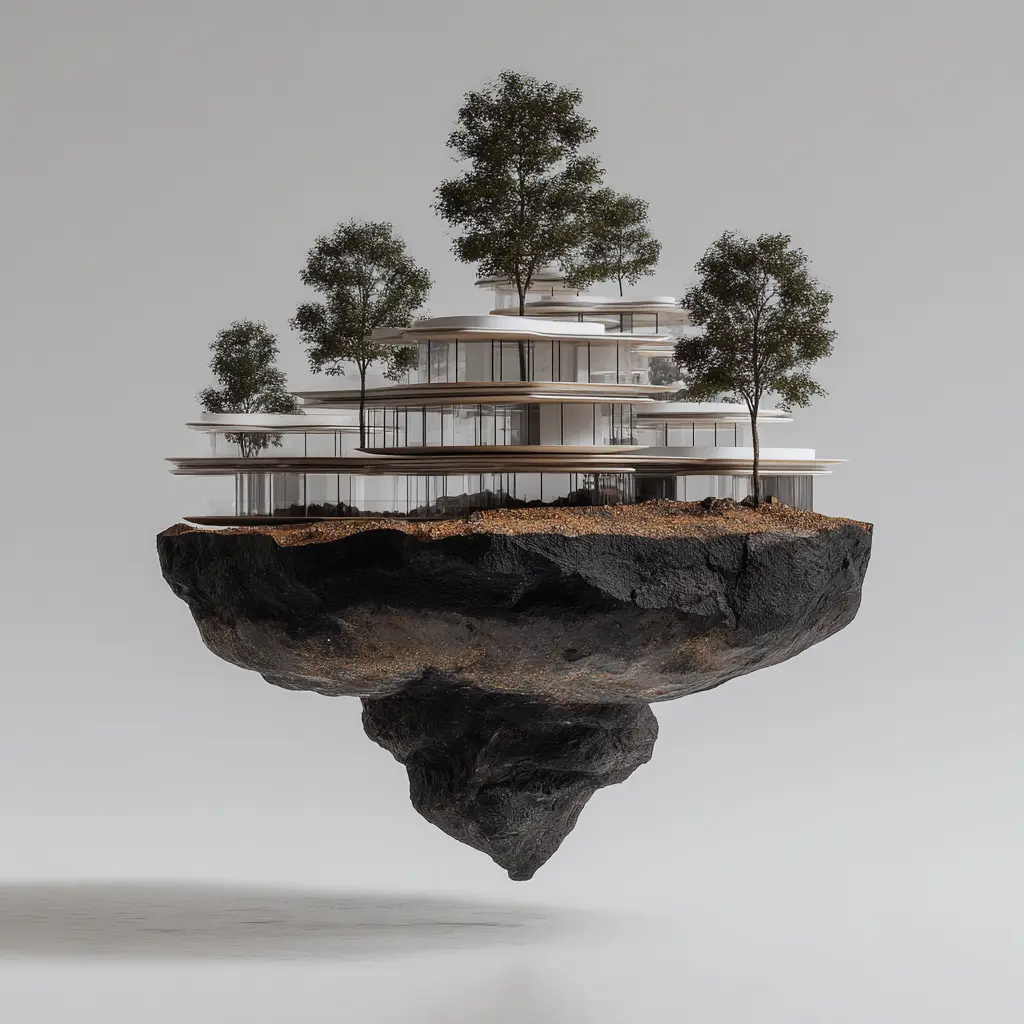
The original assumption was that AI would change how architects work internally. What's shifting is earlier than that. Clients now feel equipped to have a formal opinion about massing, materiality, and mood before the first site visit. They've spent time with an image generator. They arrive with a direction, sometimes two or three directions, printed out or pulled up on a phone.
The briefing stage, which used to be about listening and absorbing, now includes a task it never had before: articulating why a visually compelling output is not a design.
Why That Distinction Is Harder to Explain Than It Sounds
A client's AI concept might be beautiful. It might even be in the right spirit. But it has no relationship to the site's orientation, the structural system required, the material costs in the current supply environment, or the zoning constraints that will shape the envelope. It exists in a vacuum of context, and clients don't always know that when they walk in.
This is where the gap between image and architecture becomes visible. An AI output is a feeling rendered as pixels. It carries no structural logic, no MEP coordination, no carbon accounting, no lifecycle reasoning. Tools like those covered in ArchDaily's coverage of cove.tool and Forma are being used by architects to bring carbon analysis and structural feedback into early design. Clients using a consumer image generator have none of that running underneath their output. The visual result looks finished. The design work hasn't started.
That gap is real, and it's not the client's fault for not knowing it exists.
The Burden of Proof Has Moved
It used to be that clients trusted architects to know things they didn't. Now some clients arrive believing they've already done the conceptual work. That belief isn't hostile. It's a reasonable conclusion from a tool that produces compelling results fast.
The Chaos report frames this as a differentiation question for architects. What clients cannot generate is contextual reasoning. They can't prompt their way to a site-specific response, a structural logic that integrates with MEP coordination, or a material argument that holds across five years of a project lifecycle. That judgment, the kind that comes from training, site experience, and hard-won project history, remains the architect's domain.
But the burden of proof has moved. Principals can no longer assume the client comes in deferring to professional expertise. Some do. Some don't. The conversation requires a different kind of confidence now.
What Firms Handling This Well Are Doing
From what the Chaos analysis describes, firms handling this well are treating client AI outputs as raw material for a more honest initial conversation. Not a starting point for design, but a window into what the client thinks they want before they understand what they need.
That reframe matters practically. It takes pressure off the principal, positions the client as having contributed something useful, and puts the AI concept in its proper place: as a feeling, not a proposal. The client doesn't feel dismissed. The architect doesn't feel undermined. The conversation can move toward what the site, the budget, and the program require.
This is a communication skill, not a technical one. It won't show up in any software training. It has to be developed deliberately, at the partner and director level, through practice.
The Pre-Design Stage Is Already Under Pressure From Multiple Directions
Client AI concepts are one part of a broader shift in how pre-design is being conducted. Survey data from Chaos shows that 43% of respondents identify AI as having the most significant impact during pre-design. That's not a marginal opinion. It reflects how much expectation is now loaded into the earliest phase of a project, before a single drawing has been produced by the architect.
On the technical side, predictive design tools covered by Allplan are bringing cost, carbon, and structural forecasting into early design stages. Architects using these tools are operating with a level of analytical grounding that a client's image generator cannot match. The professional edge is real. The challenge is making it legible to a client who arrived with something that already looks like a design.
A Communication Discipline Worth Building
The firms that will differentiate are the ones that can walk a client from their AI-generated mood board to a grounded design argument without making that client feel foolish for having brought it. That's a narrow corridor to walk. It requires respecting the client's investment of time and curiosity while being direct about what professional design involves.
Imagine a partner who spends the first twenty minutes of a briefing meeting genuinely engaging with the client's AI outputs, asking what drew them to certain images, what they were hoping to communicate. Then, methodically, they introduce the site constraints, the structural questions, the material realities that the images don't address. The client's concept doesn't get discarded. It gets translated. That translation is the architect's work, and it's where the value of the profession becomes concrete.
This doesn't happen by accident. It's a repeatable skill that needs to be developed at the partner and director level, then modeled for the rest of the team. The briefing stage got more complex. That complexity is also an opening, for firms willing to build the muscle to meet it.

FAQ
Why are clients showing up to architecture meetings with AI-generated images?
According to a January 2026 report from Chaos, clients are using AI image generators to form opinions about massing, materiality, and mood before the first site visit. Consumer tools make it easy to produce visually compelling outputs quickly, so clients arrive feeling they have already contributed to the conceptual direction of the project. This is reshaping how the design process begins, particularly the briefing stage, which traditionally centered on the architect listening and absorbing client needs.
What is the difference between an AI-generated concept and an actual architectural design?
An AI-generated image has no relationship to a site's orientation, structural requirements, material costs in the current supply environment, or zoning constraints that shape a building's envelope. According to the Chaos report, what clients cannot generate through prompting is contextual reasoning, including site-specific responses, structural logic that integrates with MEP coordination, or material arguments that hold across a project's full lifecycle. Tools described in coverage of cove.tool and Forma on ArchDaily bring carbon analysis and structural feedback into early professional design work, a layer of grounding that consumer image generators do not provide.
How should architects handle clients who arrive with AI mood boards or concept images?
The Chaos analysis describes firms treating client AI outputs as raw material for a more honest initial conversation, positioning them as a window into what the client thinks they want rather than as a design proposal. The goal is to engage with the client's output genuinely, then introduce the site, structural, and material realities it doesn't address, moving the client from their image to a grounded design argument without making them feel dismissed. This is identified as a communication discipline that benefits from deliberate practice at the partner and director level.
Is AI having the most impact on pre-design or later project phases in architecture?
According to survey data from Chaos, 43% of respondents identify AI as having the most significant impact during the pre-design stage. This reflects how much expectation and activity is now concentrated in the earliest phase of a project, before formal drawings are produced. The combination of client-side AI tools and professional AI tools entering the pre-design phase is compressing and complicating a stage that was previously more straightforward.
What can AI tools do in early architectural design that client image generators cannot?
Professional AI tools being adopted in architectural practice operate with technical grounding that consumer image generators lack. Coverage on ArchDaily describes tools like cove.tool and Forma bringing carbon analysis to early design stages. Separately, Allplan's coverage of predictive design tools describes AI forecasting cost, carbon, and structural considerations early in the process. These capabilities represent a level of analytical integration that client-facing image tools do not offer.